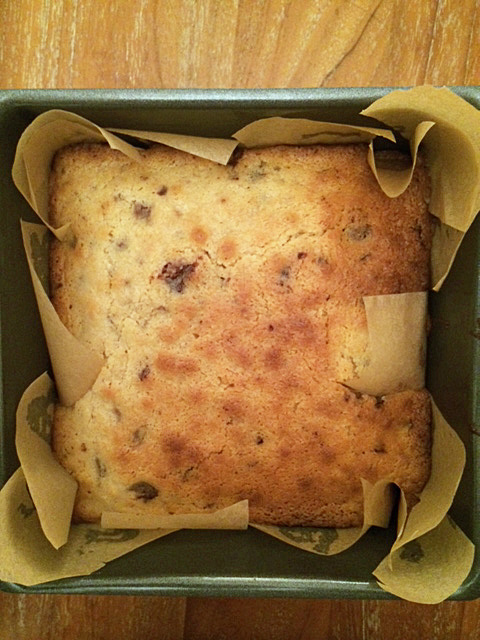
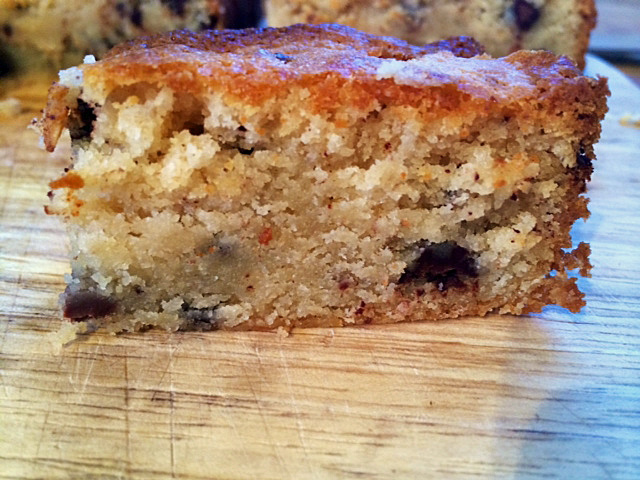
Gluten free white chocolate blondies with dark chocolate chunks

blondie

It’s late, I’m tired, I’ve been to Manchester and back to today and have only just finished working, but I promised someone I’d blog this very tasty blondie by tomorrow and at ten o’clock tomorrow morning I’m going to deepest, darkest Devon with no wifi or phone signal (the reality of this is just sinking in..) so it’s now or never. As you know the daughter has coeliac disease; she’s a very fussy eater; she likes chocolate (no fussiness with that foodstuff – what a shocker) and she’s also allergic to eggs. I’ve developed a blondie recipe that she can eat and actually doesn’t taste like it’s gluten AND egg free (it’s not crumbly and it has a decent rise) so here it is. (I made it with my new miracle egg replacer discovery – whipped chick pea brine, but I’ll give you directions for using the real thing too). It’s yum. When I left this morning the whole cake was intact as per the photo above; on my return this evening there were a few crumbs left. Mr Arabella Cooks and three lively children had demolished almost all of it (and I’ve just polished the rest off).
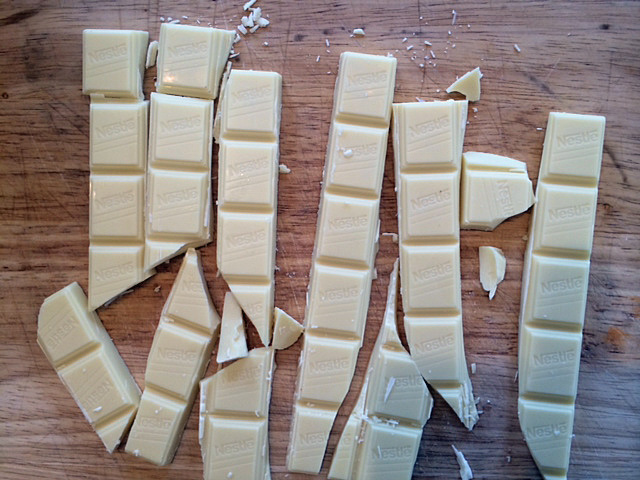
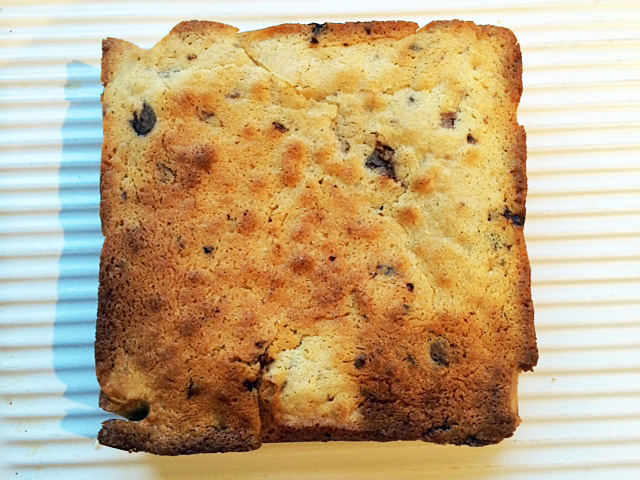
blondie 3_edited-1blondie 4

Ingredients:

  • 1 x 150g bar of gluten free white cooking chocolate (I use Green and Blacks) broken up.
  • 200g unsalted butter, cut up into small chunks
  • 150g of caster sugar
  • 1/2 a teaspoon of baking powder
  • 1/4 of a teaspoon of salt
  • 150g of gluten free plain flour (I use Doves)
  • 50g of gluten free BREAD flour (it has xanthan gum added to it which helps to bind your bake)
  • Half a bar of dark gluten free cooking chocolate (I use Green and Blacks)
  • 200 ml of milk (full fat)
  • 9 tablespoons of aquafaba (the liquid left when you drain a can of chickpeas), whipped to stiff peaks OR 3 large eggs

Method:

  1. Pre heat the oven to 180 (160 fan) degrees
  2. Grease and line a square 18cm/7 inch cake tin with baking parchment
  3. Melt the chocolate and the butter together in a large bowl over a small saucepan with a small amount of water in it, on a low heat. White chocolate (which isn’t really chocolate) does not react well to being heated too quickly or too much so watch it.
  4. Whisk your aquafaba to stiff peaks with a hand held or free standing mixer; if using eggs, whisk them to soft peaks then add the sugar and vanilla extract and beat until it looks like mousse.
  5. (With aquafaba): Mix the flours, sugar, salt and baking powder together in another bowl.
  6. Make a well in the centre and add the melted chocolate and butter mixture. Stir to combine.
  7. Fold in the whipped aquafaba using a metal spoon (you want to try and retain as much air as you can; it’s difficult as the aquafaba collapses more easily than real eggs).
  8. You want a nice ‘dropping consistency’ batter, so now add as much of the milk as you need to achieve this.
  9. Add the dark chocolate chips to the batter and stir. Add the batter to the prepared tin.
  10. Bake. In my oven it took 45-50 minutes to cook. All ovens vary so test it with a cake skewer at 25 minutes in and then every 5 minutes until it’s done. It’s OK for this to be a bit gooey in the middle – the best brownie/blondies are; it’s better for them to be under than over baked, but you don’t want too much floury taste left (esp as it’s gluten free flour) so make sure it’s got a good colour on the top and is done sufficiently.
  11. Remove from the oven; allow to cool in the tin then remove very gently and leave to cool completely on a wire rack.
  12. If you’re using real eggs to make this:
    1. You’ve melted the butter and white choc; you’ve whisked the eggs and added the sugar.
    2. Add the butter and choc to the eggs and keep whisking.
    3. Add the flours and baking powder directly to the egg and chocolate mixture and fold it in.
    4. You shouldn’t need to use the milk if you’re using eggs, but if your batter is too thick, add a little to loosen it
    5. Stir in the chopped up dark chocolate
    6. Spoon into the prepared tin and bake in the oven. I didn’t use eggs so couldn’t say for sure how long to cook it for but I’d say between 25 and 35 minutes; check it after 25 minutes as above..

Enjoy x
blondie 2

Hot chocolate mousse and raspberry ripple ice cream

hot choc mousse fiddled twice

It’s dessert week on Bake Off tonight and in honour of that I’m posting my hot chocolate mousse recipe. And because it’s so utterly delicious it will knock your socks off. And because it’s really REALLY easy to make.

Ingredients for chocolate mousse (serves 4):

  • 125g plain cooking chocolate
  • 35g unsalted butter (softened)
  • 3 eggs (separated)
  • 40g caster sugar

Method:

Pre-heat the oven to 180 c (fan).

  1. Break chocolate up into small pieces and put into a mixing bowl with the butter and melt over the pan of barely simmering water.
  2. Remove from the heat, add the egg yolks and stir well.
  3. Whisk the egg whites until they form stiff peaks, then gradually whisk in the sugar until glossy and stiff (like a meringue).
  4. Fold the meringue gently into the chocolate mixture and pour into oven-proof tea cups or ramekins. Chill in the fridge until time to cook (at least 20 minutes).
  5. When ready take the mousses out of the fridge and place them on a baking tray. Bake them at 180c for 8 minutes until the mousse has risen to the brim of the moulds and is beginning to firm up on the sides but still gooey in the middle. Serve immediately before they collapse.

Ingredients for raspberry ripple ice cream:

  • 200g raspberries
  • 3 tablespoons of icing sugar
  • 1 tablespoon of lemon juice
  • Ice cream in an ice cream maker:
    • 200g double cream
    • 200g full cream milk
    • 150g caster sugar
    • Pinch salt
  • Ice cream without an ice cream maker:
    • 600ml double cream
    • Half a 397ml can of condensed milk
    • 1 tsp vanilla essence

Method:

  1. Make the coulis – put the raspberries, icing sugar and lemon juice into a blender and whizz to a smooth sauce consistency. Pass through a sieve to remove the pips.
  2. Make the ice cream:
    1. In an ice cream maker: mix together the milk, cream, salt and sugar in a jug. Pour into a cooled down ice cream maker bowl and churn for 30 minutes or until thick.
    2. Without an ice cream maker: whisk the 600ml of double cream, tsp of vanilla and condensed milk until it’s very stiff. Line a loaf tin with cling film.
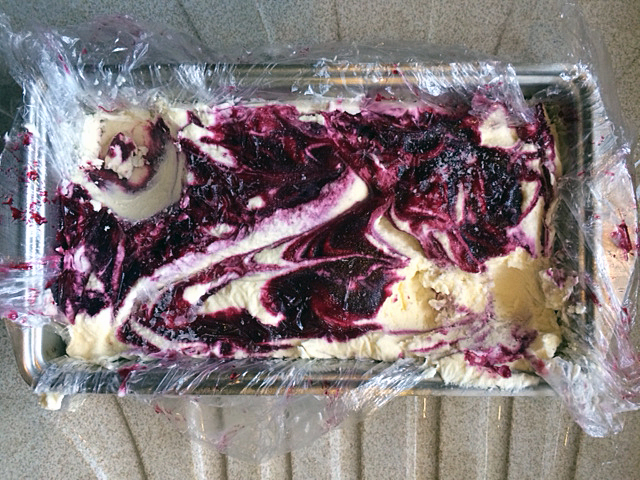
    3. For both methods once cream is churned/thick:  In either your loaf tin or a shallow plastic tub, add a layer of the cream, add a layer of the coulis, add another layer of cream and another layer of coulis, then a final layer of cream and the rest of the coulis on top. Use a knife or metal pronged stick to ripple the coulis around and through the cream, leaving a lovely swirly pattern on the top (this photo is of some blackcurrant ripple I made recently but you get the idea).

rippled ice cream

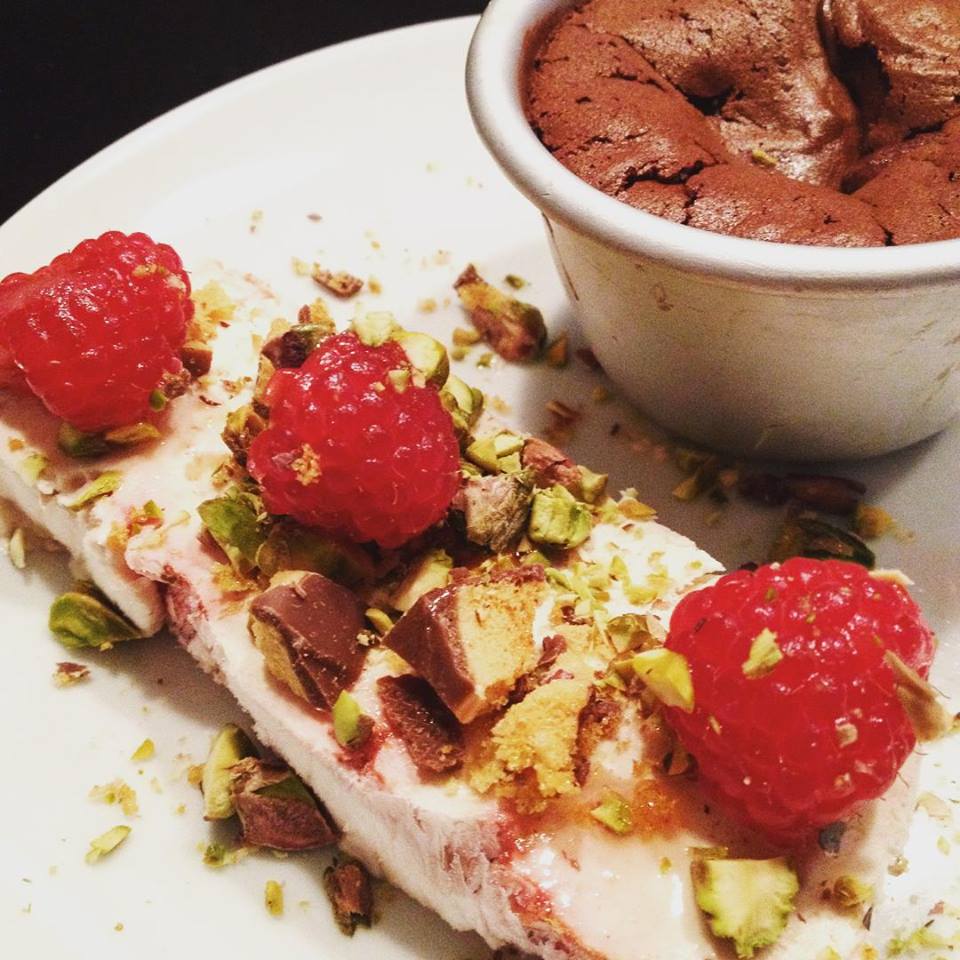
Serve the mousses straight away with a scoop or slice of raspberry ripple, which is nice with some chopped pistachios and honeycomb on top (you can make your own or just chop up a Crunchie bar if you can’t be bothered). I made this in the second round of Masterchef for the past winners (without the pistachios and honeycomb) and they and Greg all declared it yum!

hot chocolate mousse with rasp ripple iced cream

(Wonderful photo by Blanche Hughes, who has many more brilliant photos and recipes on her blog: Blanched. Check it out. x)

Father’s Day tea: Nana Christine’s cheese scones; strawberry and brown sugar pavlova

scones 7

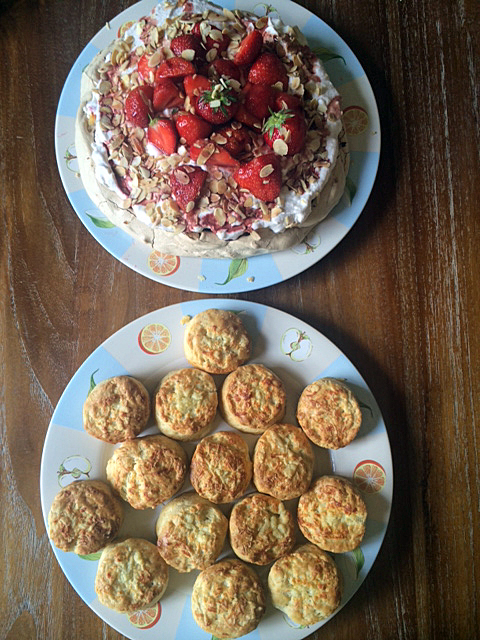
I went out last night for the third evening in a row. As it was Father’s Day today I used the opportunity to make it up to my forbearing husband by making him some very nice things to eat. I did my best ever roast chicken for lunch (thyme butter in-between the breast meat and skin, and half a lemon in the cavity; duck fat roast potatoes) and in the afternoon we had high tea with grandparents: cheese scones and a brown sugar, chestnut and strawberry pavlova.

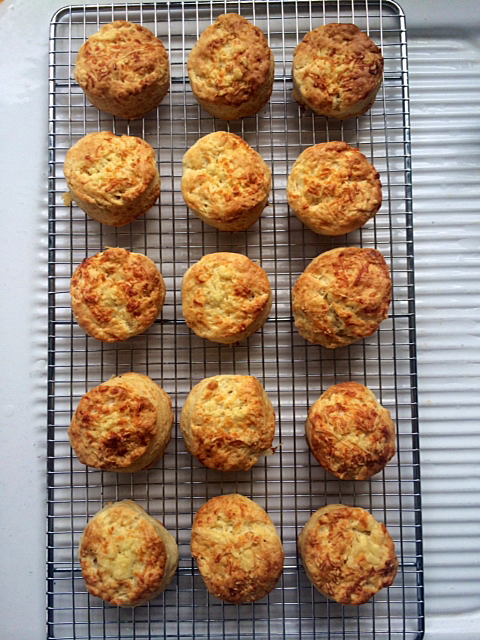
The Nana Christine in the title is my sister’s mother in law. She is an amazing baker and her cheese scones are delicious. The secret, she says, is not to roll out the dough with a rolling pin but simply flatten it using the heel of your hand. This helps the scones rise on their own and keeps them light. It definitely works – I’ve made them time and time again and they always turn out beautifully. They have a high proportion of cheese in the mix which I think is also key. I’m often disappointed by how un-cheesy a cheese scone can be. I also add a sprinkle of finely grated cheese on top of each scone. I think it looks appealing and makes them taste even better. My two year old was going to eat these so I didn’t add any cayenne pepper, but it’s customary to do so and makes them taste a little ‘tingly’, which I like, so I’m putting it into the recipe as an optional extra.

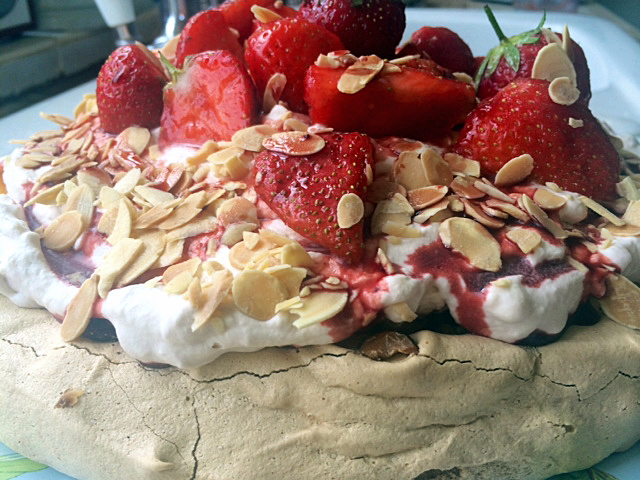
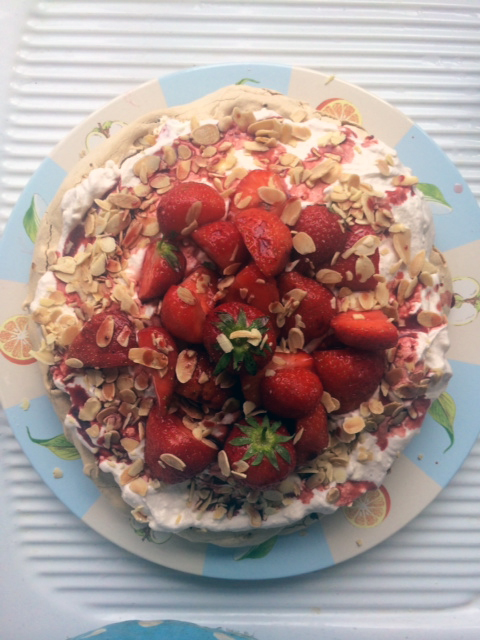
The pavlova is a Mary Cadogan recipe which I tweaked only very slightly.  It was absolutely divine and my best pavlova ever (I do say “This is my best ever”  rather often; “You say that every time you cook something” replies my husband; but this time, honestly, it was the truth). The brown sugar gives the meringue a gorgeous caramel flavour and the cornflour and vinegar give it a fabulously gooey middle. I am trying very hard not to go back to the fridge and polish off the whole lot.

Cheese scones Ingredients (makes 16):

  • 285g self raising flour
  • 85g butter (cold)
  • 230g mature cheddar, grated, plus a little extra for the top
  • 180ml milk
  • salt and pepper
  • Pinch of cayenne pepper (optional)

Method:

Preheat the oven to 180 C (fan)

  1. Mix the flour with the cayenne pepper if you’re going to use it (you can sift them together; you don’t need to sift if you’re not going to add the cayenne)
  2. Cut the butter into cubes and rub it into the flour with your fingertips until it resembles breadcrumbs
  3. Add a pinch of salt and a twist or two of black pepper
  4. Stir in the cheese with a metal fork, so that it’s completely coated with flour. You don’t want the cheese to melt so don’t use your hands.
  5. Add the milk slowly and mix into a stiff dough with a knife or fork. You may not need all the milk; you may find you need a teeny bit more. You need to use you judgement here –  you want a stiff, not gooey dough, but one that you can work with and won’t fall apart.
  6. Turn the dough out on to a floured surface and knead it lightly.
  7. Flatten out the dough with the heel of your hand, to about 3cm high. No lower or the scones won’t rise enough.
  8. Use a round cookie cutter (mine is 6cm diameter), cut out your scones and place on baking parchment on a metal baking tray. (When you have cut as many as you can, knead the remaining dough together again and repeat…)
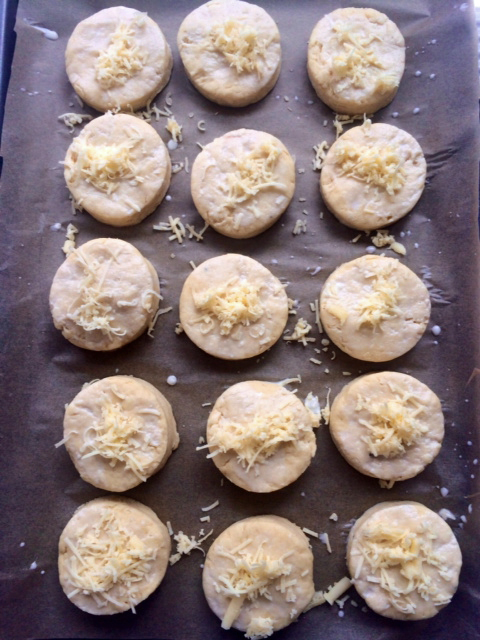
  9. Glaze them with milk and sprinkle some grated cheese on top of each scone pavlova 5
  10. Bake in the oven for 20 minutes until they are a deep golden colour.
  11. Remove from the oven and cool on a wire rack, or just eat them immediately, with a large swipe of salted butter. Y U M!

          scones 8

Variation: To make fruit scones replace the cheese with 55g of sugar (golden caster is nice) and 55g sultanas (and obvs leave out the salt, pepper and cayenne too). Add the sugar and sultanas after you’ve rubbed in the butter; dip your cookie cutter in flour before cutting out each scone (to stop it sticking); don’t twist the cutter but bang your hand on the top and then pull it out cleanly; bake near them in a slightly hotter oven – 200C, for 10-15 minutes until golden. You could also use a mixture of milk and lightly beaten egg (about 100ml of milk and 2 medium eggs; reserve a little of the egg to glaze the top of the scones before baking).

Strawberry and brown sugar pavlova

pavlova 2

Ingredients:

For the pavlova

  • 2 tsp vinegar, any type but not malt. I used white wine vinegar.
  • 2 tsp vanilla extract
  • 2 heaped tsp cornflour
  • 4 large egg whites
  • 100g light muscovado/light brown sugar
  • 100g golden caster sugar
  • 25g whole (not blanched) hazelnuts bashed up a bit (I whizzed mine in my mini blender for a few seconds; you don’t want crumbs but slightly broken up is nice)

For the topping:

  • 600g strawberries
  • 3 tbsp cassis (blackcurrant liquer)
  • 3 tbsp pomegranate molasses
  • A tablespoon of icing sugar
  • 2 tablespoons of caster sugar
  • About 600ml of double cream
  • Some toasted flaked almonds (roughly 30g; buy flaked almonds and put them onto a baking sheet in the oven until you can smell them – about 5 mins or so, and they are slightly darkened)

Method:

For the pavlova

  1. Preheat the oven to 140C/fan 120C. Cut off a piece of baking parchment to fit your baking sheet; using a pencil draw round a 20cm cake tin onto the baking parchment; turn the parchment over (so you don’t get pencil on your pavlova).
  2. Add the vinegar and vanilla essence to the cornflour, gradually, to make a paste.
  3. Whisk the egg whites until stiff. I used a freestanding electric mixer but you can easily use a hand held electric whisk.
  4. Gradually whisk in the sugars, adding a little paste with each addition, until a thick marshmallowy meringue is formed. Don’t overwhisk your egg whites or the mixture will become grainy and you’ll knock all the air out. It will still taste great but won’t be quite as high (I actually over whisked mine a little, and it was still delicious, so don’t get too hung up about it).
  5. Spread it out in the circle on the baking sheet, swirling the knife (a palette knife is a good implement to use) to make peaks.
  6. Scatter over the hazelnuts
  7. Bake for 1 hour, then turn off the oven and leave it to cool. (I made mine the night before and left it in the oven overnight).

For the topping:

  1. Make a coulis by whizzing up 100g strawberries and a tablespoon of icing sugar with a hand blender, in the small bowl of a food processor or in a mini blender. Sieve the sauce into a bowl and add the cassis and pomegranate molasses.
  2. Whip the cream with the caster sugar, softly. (It is absolutely essential not to overwhip the cream). Top and slice half the strawberries and fold them into the cream.
  3. Swirl 3 tbsp of the coulis through the lightly whipped cream.
  4. Put the pavlova onto a large, flat plate. Spoon over the cream, scatter on the remaining strawberries (I left some whole, halved some with their tops still on and topped and halved the rest) and the toasted flaked almonds and drizzle with the sauce. Serve to some very lucky people indeed. Yummmmm!

pavlova 3

Salted caramel chocolate tart

tart 2  tart on table

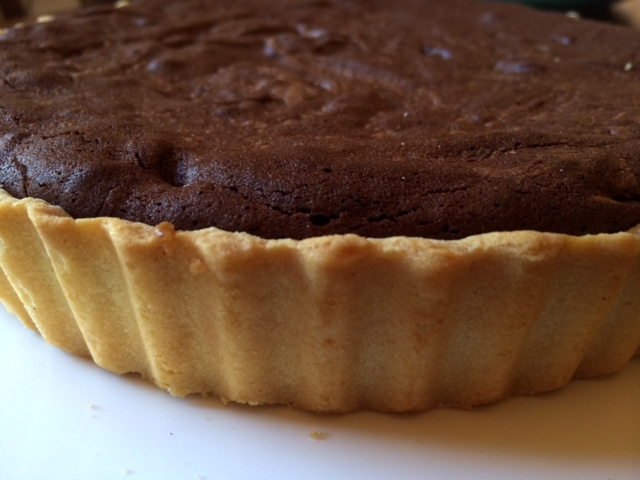
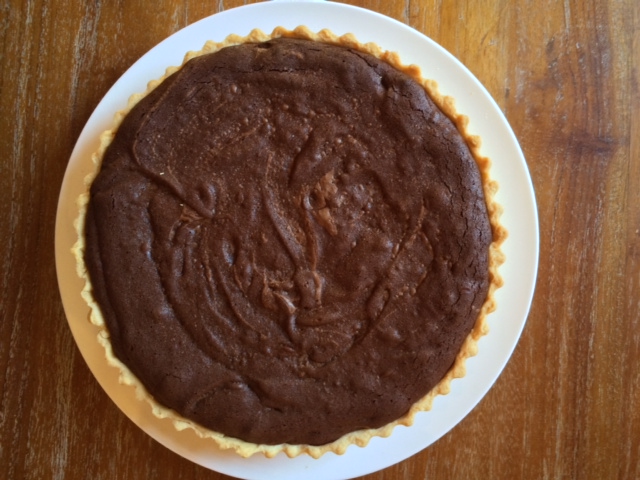
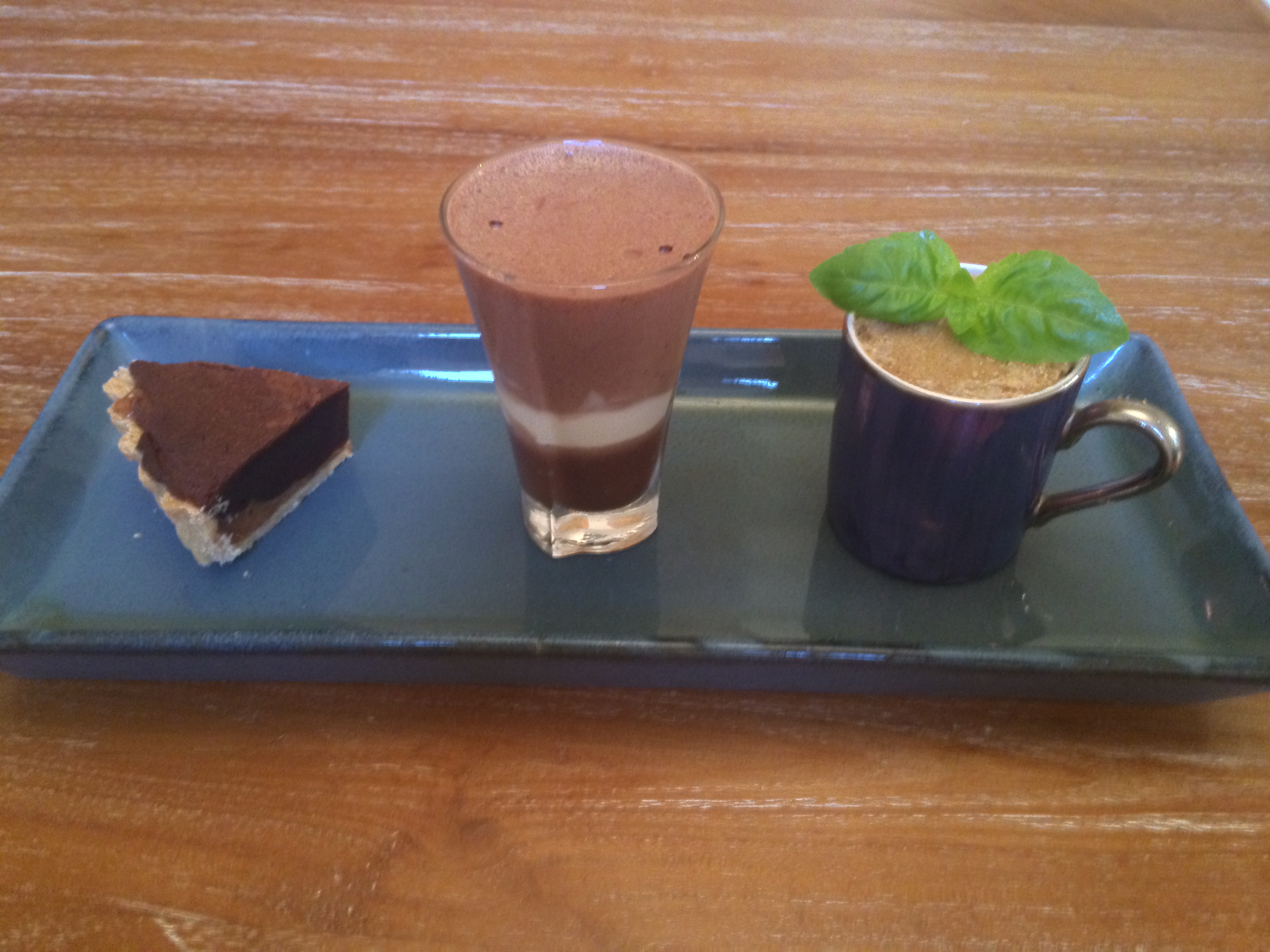
As promised, the salted caramel chocolate tart I made for last week’s party. It’s a recipe very dear to my heart as it got me onto Masterchef. I made a trio of chocolate puds for my filmed audition – salted caramel dark chocolate tart, milk chocolate mousse layered with mascarpone cream and a basil infused raspberry and white chocolate cheesecake (the cheesecake didn’t set so I served it upside down in an espresso cup):

qualifing dishes

I’ll post the recipe for all three at a later date, but in the meantime here is the salted caramel chocolate tart. The recipe comes from Rachel Allen (famous Irish TV cook; think blond, Irish Nigella) and is difficulty level ‘high’. But so, SO worth it. Hell it’s a Masterchef level dish so if you really want to impress anyone, this is definitely worth doing. (I’ve yet to come across anyone who didn’t swoon with delight upon eating it).

Ingredients:

For the sweet shortcrust pastry

  • 200g plain flour
  • 100g chilled butter (cubed, plus extra for greasing)
  • 1 tablespoon of icing sugar
  • a lightly beaten (large) egg

For the caramel:

  • 225 g caster sugar
  • 100 g chilled butter (cubed)
  • 100ml double cream
  • 1 heaped teaspoon of sea salt flakes

For the chocolate layer:

  • 100g caster sugar
  • 2 eggs
  • 2 egg yolks
  • 250g dark chocolate
  • 150 g butter (cubed)

Method:

For the sweet shortcrust pastry:

1) Pulse the flour, butter and icing sugar in a food processor briefly until the butter is in small lumps. Add half the beaten egg and continue to whiz for another few seconds or until the mixture looks as though it may come together when pressed. Prolonged processing will only toughen the pastry, so don’t whiz it up until it is a ball of dough. You may need to add a little more egg, but not too much as the mixture should be just moist enough to come together.

If making by hand, rub the butter into the flour and icing sugar until it resembles coarse breadcrumb,s then using your hands add just enough egg to bring it together.

Reserve any leftover egg to use later.

2) With your hands, flatten out the ball of dough until it is about 2cm thick, then wrap in cling film or place in a plastic bag and chill in the fridge for at least 30 minutes.

3) After 30 minutes, butter a 23cm deep loose-bottomed, fluted tart tin and remove the pastry from the fridge. Roll it out to fit the tart tin, no thicker than 5mm. Rachel recommends putting it in between two sheets of clingflim but I’ve tried this and it makes rolling the pasty bloody difficult. I’d suggest just using enough flour on your surface and rolling pin to keep it from sticking.

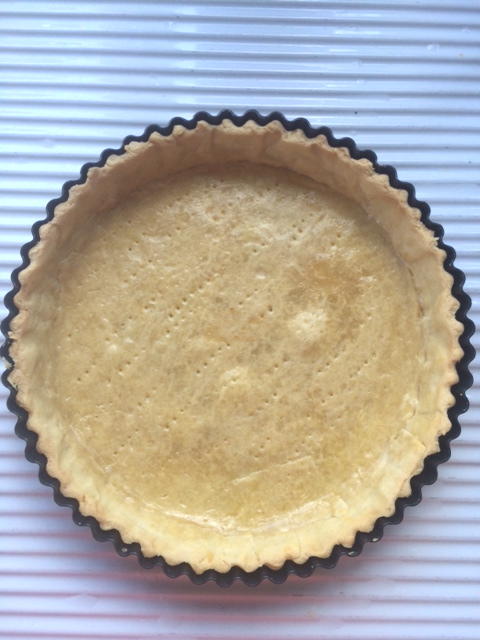
4) Once your pastry is large and thin enough to fit your tart tin, roll it up round the rolling pin. Then unroll it over the tart tin, with the tin centrally beneath the pastry. Press the pastry into the edges of the tin (a good trick for doing this is to use a small ball of the pastry as a damper, rather than your fingers). Then using your thumb, ‘cut’ the pastry along the edge of the tin (press down onto the edge of the tin and the excess pastry falls away) for a neat finish. Prick the base all over with a fork and chill the pastry in the fridge for another 30 minutes or the freezer for 10 minutes.

5) Meanwhile, preheat the oven to 180C/fan 160C/gas 4. Remove the pastry from the fridge and line with foil, greaseproof paper or baking parchment, leaving plenty to come over the sides. Fill with baking beans or dried pulses, then place in the oven and bake blind for 15–20 minutes or until the base of the pastry case feels dry. Remove from the oven, take out the baking beans and foil/paper, brush the base of the pastry with any leftover beaten egg, and cook in the oven for another 3 minutes or until lightly golden. Remove from the oven and set aside:

tart 13

For the caramel:

6) Put the sugar and 75ml water into a heavy-based saucepan over a low heat and stir until the sugar dissolves. Add the butter and stir until it melts. Increase the heat to medium and allow to bubble away, stirring occasionally, for about 15 minutes or until the mixture is a light toffee colour. Mix in the cream and sea salt and boil for another 2–3 minutes until slightly thickened. Allow to cool. (NB this sounds straightforward. It is *not*. You need to stand over the molten sugar and butter, stirring and watching like a HAWK. The first time I did it it took me four gos to get it right. It burns and crystallises very, very quickly. Take it off the heat as soon as it is toffee coloured or it will burn and crystalise and you’ll have to start again).

For the chocolate layer:

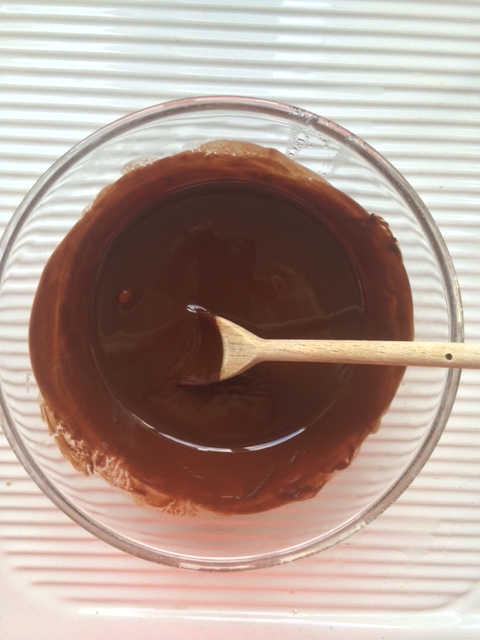
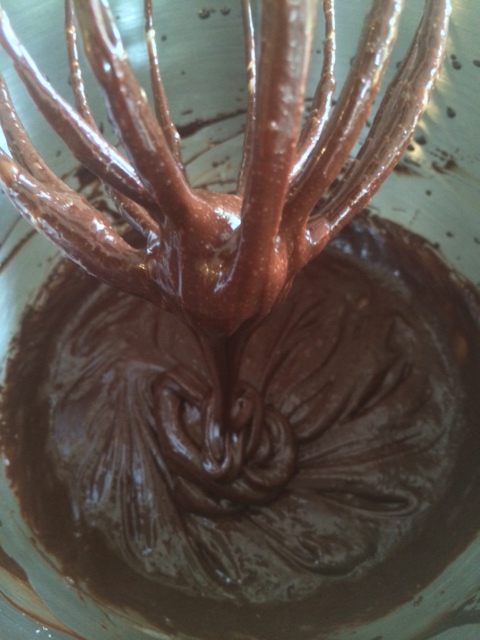
7) Whisk the sugar, eggs and egg yolks until thickened and creamy in colour. Gently melt the chocolate and butter together in a bowl over a saucepan of simmering water. Leave to cool for a minute and then add this to the sugar and egg mixture and whisk until glossy:

tart 10tart 8

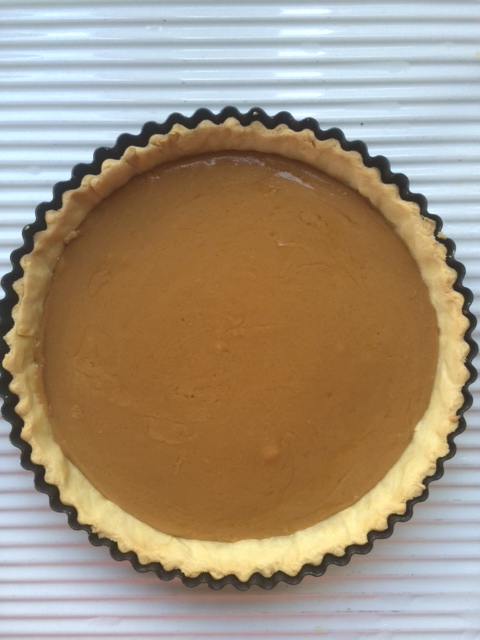
8) Spread the caramel over the cooled pastry base:

tart 11

9) Spoon over the chocolate mixture, spreading it evenly.

tart 5

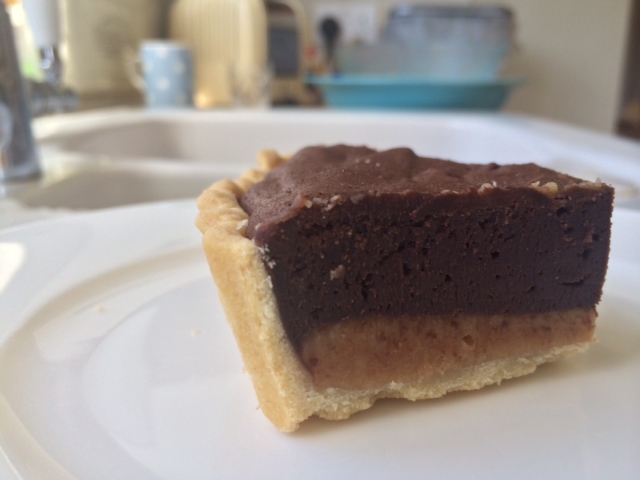
10) Bake in the pre-heated oven for about 20 minutes or until it is almost set but still a bit wobbly. Allow to cool in the tin for 40–45 minutes before removing from the tin and serving in slices. Yum (and then some!)

tart1 tart fianl

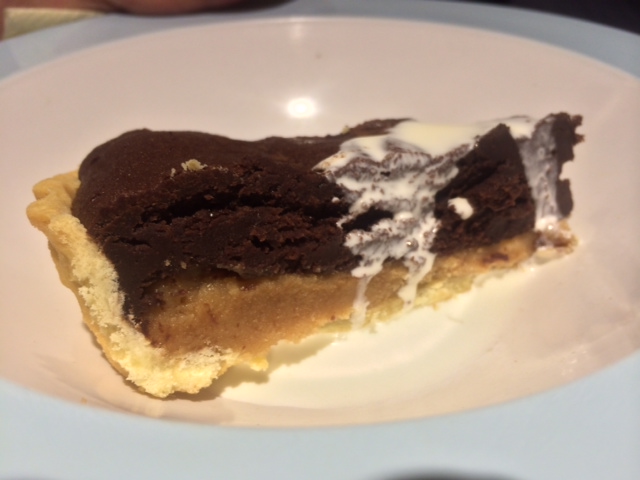
[Some people like to put cream over their slices. I think that is inherently wrong as you don’t need it, but each to their own.]

tart with cream

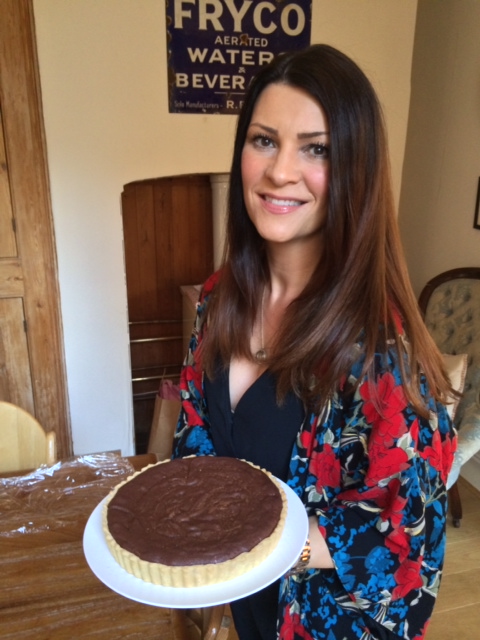
me with tart